
 AFP
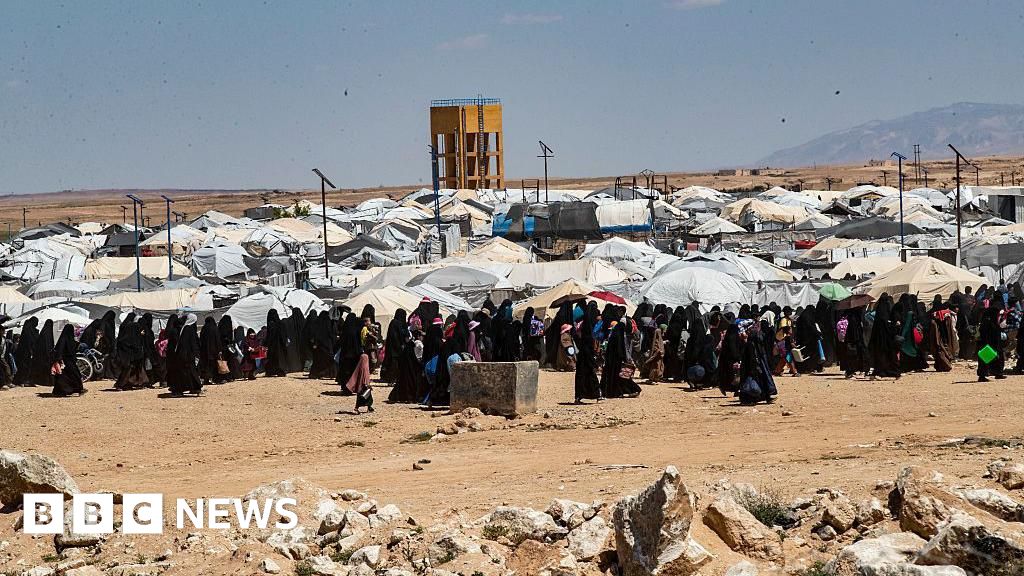
AFPSyria’s government has announced a new ceasefire with the Kurdish-led Syrian Democratic Forces (SDF), after the militia alliance withdrew from a camp holding thousands of people with alleged links to the jihadist group Islamic State (IS).
The SDF said its forces were “compelled” to leave al-Hol camp and redeploy to other cities in north-east Syria “due to the international indifference toward the issue of [IS]”.
Syria’s interior ministry complained that it took place without co-ordination with the government or US-led coalition against IS.
Later, the presidency said it had reached an “understanding” with the SDF on the future of Hassakeh province, which has a large Kurdish population.
A statement said the SDF would be given four days to carry out consultations on a detailed plan for the peaceful integration of areas under its control into the state.
The presidency also promised that government forces would not enter the cities of Hassakeh and Qamishli, or any Kurdish villages.
At the same time, the SDF declared its “full commitment to the ceasefire” and said its forces would not initiate any military action unless they were attacked.
The SDF also said it was ready to “move forward with implementing” the deal reached with the government on Sunday that was supposed to end almost two weeks of fighting.
The agreement should see the Kurdish-run autonomous region in the country’s north-east and its key infrastructure brought under government control, as well as the integration of the tens of thousands of SDF fighters into the defence and interior ministries’ forces.
It represents a major blow for the SDF, which had been reluctant to give up the autonomy that it won for Syria’s Kurdish minority when helping US-led coalition forces defeat IS militarily during the country’s 13-year civil war.
Interim President Ahmed al-Sharaa has vowed to reunify Syria since he led the rebel offensive that overthrew Bashar al-Assad in December 2024, but the country remains deeply divided and has been rocked by waves of deadly sectarian violence.
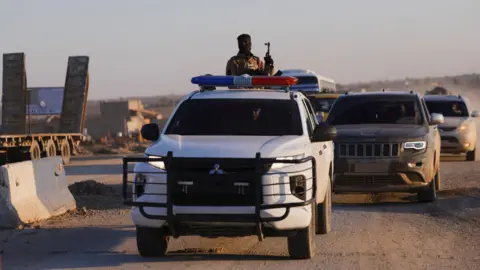
The SDF announced its withdrawal from al-Hol camp as Syrian army and interior ministry forces advanced deep into Hassakeh province after taking control of Deir al-Zour and Raqqa.
“Due to the international indifference toward the issue of the IS terrorist organisation and the failure of the international community to assume its responsibilities in addressing this serious matter, our forces were compelled to withdraw from al-Hol camp and redeploy in the vicinity of cities in northern Syria that are facing increasing risks and threats,” it said.
In a statement sent to Kurdish news agency Hawar, SDF commander Mazloum Abdi urged the US-led coalition – once his main ally – to “bear its responsibilities in protecting facilities”.
“We withdrew to predominantly Kurdish areas and protecting them is a red line,” he added.
The Syrian interior ministry said the SDF units had pulled out of al-Hol without any co-ordination in an “attempt to pressure the government over the fight against terrorism”.
The ministry added that it was “taking all necessary measures in co-ordination and co-operation with the international coalition to maintain security and stability”.
The defence ministry also said it was ready to assume control of the camp as well as all prisons holding suspected IS fighters in the region.
 EPA
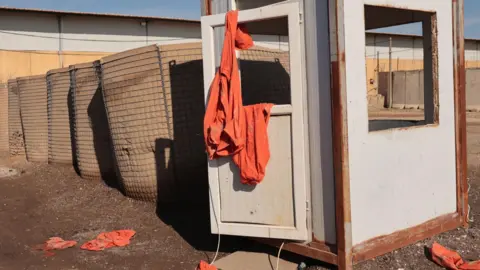
EPABefore the fighting with the government erupted earlier this month, the SDF was holding about 8,000 suspected IS fighters at prisons in north-eastern Syria.
Around 34,000 people linked to IS were also being detained at al-Hol and another camp, Roj, the UN reported last August. The population of the camps, of which 60% were children, comprised 6,700 Iraqis, 15,500 Syrians and 8,500 citizens of other countries, including the UK.
The SDF, US and UN have long called for the repatriation of the foreign IS suspects and their families from north-eastern Syria, citing the political instability and dire conditions in the prisons and camps, but many countries have refused to take them.
Earlier, the government and SDF traded accusations over the escape of suspected IS fighters from an SDF-run prison in Shaddadi, in southern Hassakeh province.
The interior ministry said on Monday night that its special forces and army soldiers had entered the town following “the escape of around 120 [IS] terrorists” from the prison. Search operations by the security forces resulted in the arrest of 81 of the fugitives, it added.
The SDF said it had lost control of Shaddadi prison in the afternoon after “Damascus-affiliated factions” mounted a series of attacks and killed of dozens of its fighters, who it said had been attempting to “prevent a serious security catastrophe”.
SDF spokesman Farhad Shami said around 1,500 IS members had escaped during the clashes, according to Reuters news agency.
 Reuters
The SDF also accused government forces of attacking al-Aqtan prison, north of the city of Raqqa, which is holding IS members and leaders.
On Tuesday, a statement said the prison’s buildings and facilities had been shelled and its water supply cut off. “These practices constitute a blatant violation of humanitarian standards and pose a serious threat to the lives of the detainees,” it warned.
However, the defence ministry denied that there had been clashes in the vicinity of the prison.
It said the facility was “fully secured”, with military police and internal security forces deployed around the facility and in contact with the administration to ensure supplies were provided.
The US, which was once the SDF’s main ally in Syria, was monitoring developments in Syria with “grave concern”, a White House official said.
“We urge all parties to exercise maximum restraint, avoid actions that could further escalate tensions, and prioritize the protection of civilians across all minority groups,” they added.
Special envoy Tom Barrack meanwhile explained that the rationale for the US-SDF partnership had “largely expired”, and that his country was currently focused on ensuring the security of facilities holding IS prisoners and facilitating talks between the SDF and President Sharaa’s government on implementation of the ceasefire deal.
“This moment offers a pathway to full integration into a unified Syrian state with citizenship rights, cultural protections, and political participation – long denied under Bashar al-Assad’s regime,” he wrote on X.
After signing the deal with the SDF on Sunday, Sharaa said he hoped it would allow Syria to “end its state of division and move to a state of unity and progress”. However, Abdi said the fighting had been “imposed on us” and that he had accepted the deal “to stop the bloodshed”.
https://ichef.bbci.co.uk/news/1024/branded_news/515a/live/e890ef40-f604-11f0-842b-5772902eef21.jpg
2026-01-20 19:12:56